
 Canada
 China
China France
 Korea
Korea Other Countries




Former Elite Basketball Performance Director Chelsea Lane on injury minimization, staying game-ready, and why the best players “own it”
High performance sport can look effortless from the stands: the snap of a crossover, a sudden change of direction, a body twisting mid-air and somehow staying balanced. But behind each moment is a constant, deliberate effort to keep athletes healthy enough to do “superhuman things”.
Chelsea Lane has lived inside that reality. An Australian-trained sports physiotherapist who has evolved into a performance leader, she spent six years in the league, working with the Golden State Warriors and the Atlanta Hawks.
In this conversation, Chelsea breaks down what injury minimization means at the highest level, what it takes to keep athletes ready to perform through an 82-game season, and the routines and practices that separate the best from the rest.
What does a “Director of Performance” actually do?
Chelsea Lane: “It means you’re tired a lot! It’s a pretty busy job.
“You are responsible for a team of really talented performance specialists and healthcare providers. My job is to coordinate all of their fantastic skills and expertise to make sure that we deliver bespoke programs to our very special individual athletes to allow them to be great.”
 What did you observe about the mentality of top players toward injury prevention at the highest level?
Chelsea Lane: “The reality of sport is that it is dangerous and people do get injured. So really it’s about minimizing how often that happens and, when it does happen, treating it appropriately and helping them back to competition.
“Each player comes to their mentality around injury prevention in their own time and in their own way. Some arrive early because they’ve had great parents or great coaches. Others have to learn the lesson the hard way through a significant injury.
“What is universal is that the top guys prioritize their injury prevention and injury management. And it’s not just that they prioritize it - they own it. It’s at the top of their list. It’s that important to them.”
From a performance director’s perspective, how important is physical conditioning compared to skill training?
Chelsea Lane: “All sports have an incredibly important skill element, but making sure the body and the mind are fit for purpose is also critical. Physical preparation protects us from the demands of our skill training and the load the sport places on us.
“The more you look after your body, the more skill work you’ll be able to do. Not just in the short term, but over a longer career, because you’ll be healthier throughout.
“To young athletes wondering about physical conditioning, I’d say don’t just look at Instagram reels. Use a professional, get good advice, and then own it.”
Ankle sprains are very common in basketball. What kinds of injuries do you see when ankle strength and stability aren’t properly addressed?
Chelsea Lane: “The foot and ankle are where the rubber hits the road. If something is even a little off there, it can impact anywhere up the chain and increase the risk of future injury.
“The greatest risk to an ankle injury is that you’ve had one before. Once you get into chronic injury, that becomes a real problem.
“If the ankle and foot aren’t fit for purpose, it impacts performance. Your shot might be off. You might not accelerate the same way. You might not move around opponents the same way so it can be major.”
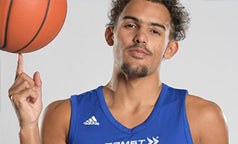
You have worked with Trae Young. When Trae was dealing with ankle issues, what were the main priorities you focused on?
Chelsea Lane: “Trae and I were teammates at the Atlanta Hawks. He was my rookie, and we joined the organization in the same year. “There’s a lot of pain and dysfunction that comes about from having an ankle injury, this stuff hurts. So that was our first priority.
“Then we quickly moved to, how do we get this guy back on court? But how do we do it safely? And also, how do we keep him fit and healthy and also engaged when he's not doing the thing he was built to do, which is hoop.”
 At the time, what led to choosing a brace rather than other options?
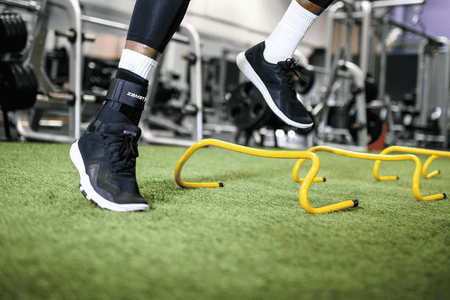
Chelsea Lane: “We started with tape. I’m a heavy tape user. “But the tape wasn’t meeting all of our needs. It wasn’t comfortable, it was restrictive, and it was hard to get on and off. We needed protection without those downsides so we moved to an ankle brace.”
Why did you choose the Zamst A2-DX ankle brace?
Chelsea Lane: “Trae is dynamic. He’s everywhere. He moves quickly and unpredictably.
“We didn’t want to take away his superpower. Any ankle brace needed to be light and comfortable enough that he could switch off and not think about it, while still feeling protected.
“I had already seen this brace working really well on a point guard in the NBA, so I knew the A2-DX ankle braces ticked every box. It’s comfortable, supportive, protective, light, breathable, and easy to put on and take off. “It didn’t detract from what he does - it enhanced it.”
Do players adjust or choose different products depending on whether it’s a game or a practice session?
Chelsea Lane: “Yeah, absolutely. In a full-contact environment, for Trae specifically, we want as much protection as possible while still preserving mobility.
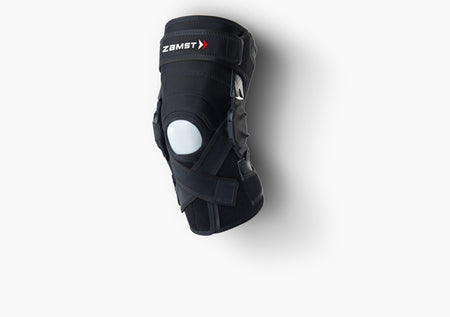
“But if we’re not in a full-contact situation and we want more freedom of movement, like getting shots up or doing non-contact drills, we’ll adjust. In Trae’s case, we spent time using the Filmista ankle brace because we didn’t want tape directly on the skin.
“If we’re going to take tape off the skin, we still need something there. The Filmista ankle goes straight onto the skin and almost immediately replaces our taping situation. It’s not full-contact-worthy, but it allowed us to step down appropriately in different environments without having athletes wrapped up all the time.”
 What three pieces of advice would you give a young player who wants to get into the top league?
Chelsea Lane: “Don’t skip steps. You've got to get the basics right. You can't reach for the sparkly stuff if you haven't got the foundations.
“Get great expert advice. Have a great team around you and listen to what they’re telling you.
“And then get ready to work and work and work and fall down and get up and fall down and get up, but just keep getting up and keep reaching.”
 About Chelsea Lane
Chelsea Lane is an Australian-trained sports physiotherapist and high-performance specialist whose career spans elite sport across the globe.
Chelsea rose to international prominence during six years in the NBA, serving as Director of Performance and Sports Medicine with the Golden State Warriors, where she was one of the first women to lead an NBA performance and medical department and helped support multiple championship runs, and later as Vice President of Athletic Performance and Sports Medicine with the Atlanta Hawks.
Known for her holistic, athlete-first approach, she now consults and leads high-performance programs, sharing insights on injury minimization, resilience and athlete readiness at the highest levels of sport.